Written by Brik & ShotBlogged
A 3-year-old boy watched his father cry because Italy lost the 1970 World Cup to Brazil. The boy didn’t understand football. He didn’t understand World Cups. But he understood his father’s tears. And he made a promise: one day, he would beat Brazil and bring the trophy home.
Twenty-four years later, the boy was a man. Roberto Baggio. Italy’s greatest talent. The reigning Ballon d’Or holder. He had carried Italy through the entire 1994 World Cup on his shoulders. Five goals. Match-winning performances against Nigeria, Spain, Bulgaria. Single-handedly dragging his country to the final against Brazil.
The final went to penalties. Two Italians had already missed. Baggio stepped up for the fifth. If Baggio misses World Cup belongs to Brazil.
He struck it over the bar.
Roberto Baggio stood motionless. Hands on hips. Head down. Staring at the grass. The image became known as “the man who died standing.”
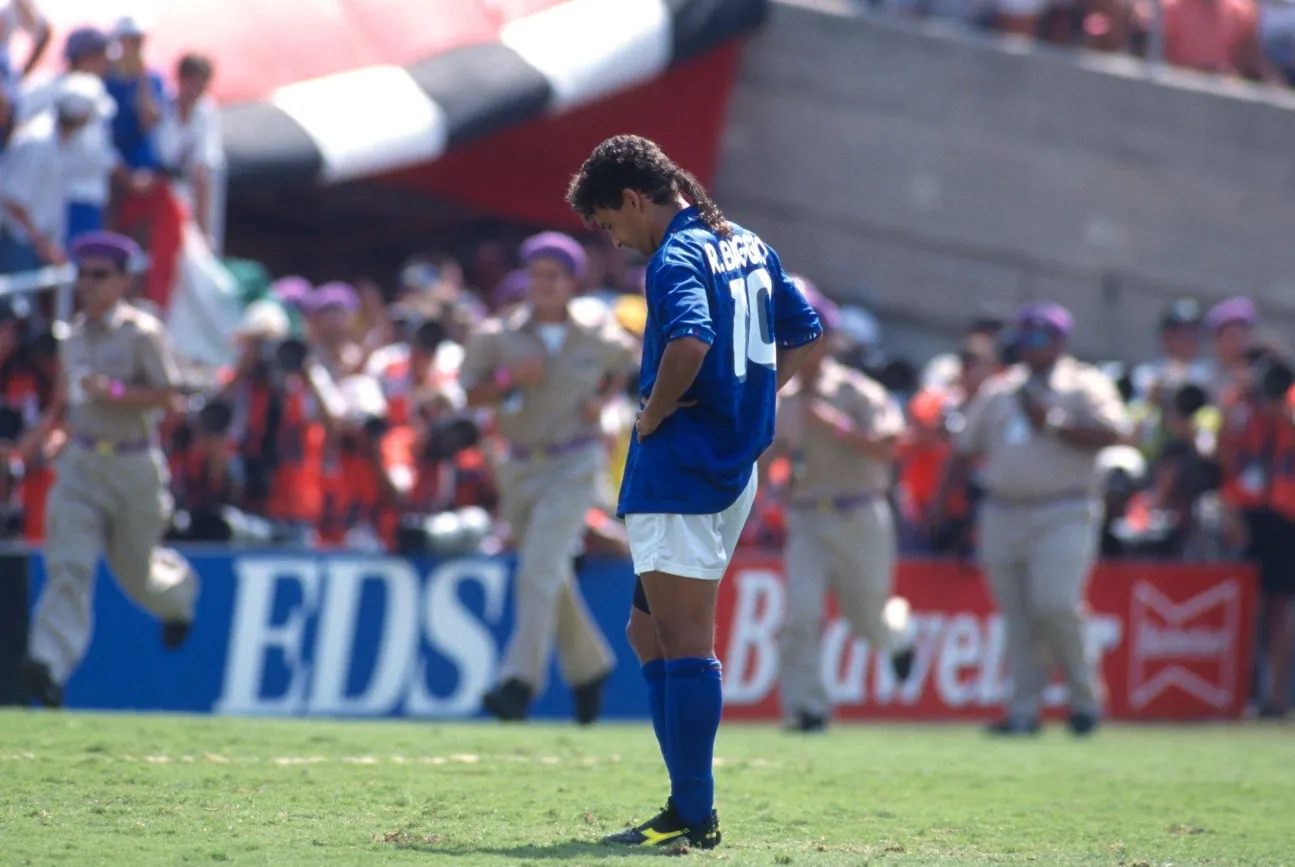
He later said: “It is a wound that never closes. I had dreamt of playing in a World Cup final since I was a little boy, but I never thought it could end like that.”
The promise was never kept. Football moved on from him. The way it always does.
Not That Long Ago
In 2005, El Clásico wasn’t a football match. It was a Ballon d’Or ceremony on a pitch. Stars everywhere. Real Madrid still had their Galácticos: Zidane, Ronaldo Nazário, Beckham, Roberto Carlos, Casillas. Barcelona were building a dynasty around Ronaldinho, Eto’o, Deco, Xavi, Puyol, Iniesta, and teenage Messi who was just beginning to announce himself to the world.
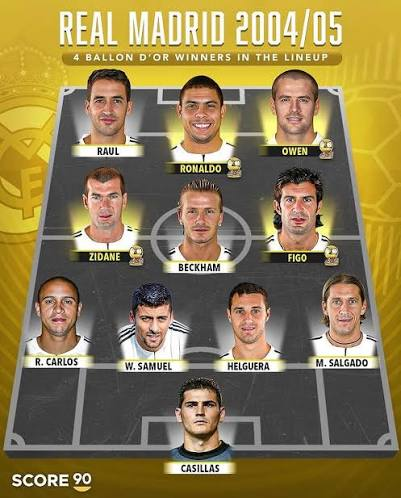
Every game felt impossible. That many icons sharing the same field at the same time. Ronaldinho at the peak of his magic. Zidane still controlling games effortlessly. Messi only starting. Looking back now, it feels unreal. Like a dream the sport had about itself.
And then Messi and Ronaldo took over. And for two decades, football revolved around two men.
The Guy Who Came Back
I stopped watching football because life happened. I used to play. I used to follow every single El Clásico, every UEFA Champions League night, everything. Football was part of who I was. And then it wasn’t. Life got busy. Priorities shifted. Football kept going without me, rules changed and so did I.
The 2026 World Cup brought me back. Not because of the football itself. Because of what it showed me.
The tournament was in America. And so was I. And I felt something different. Something beyond football.
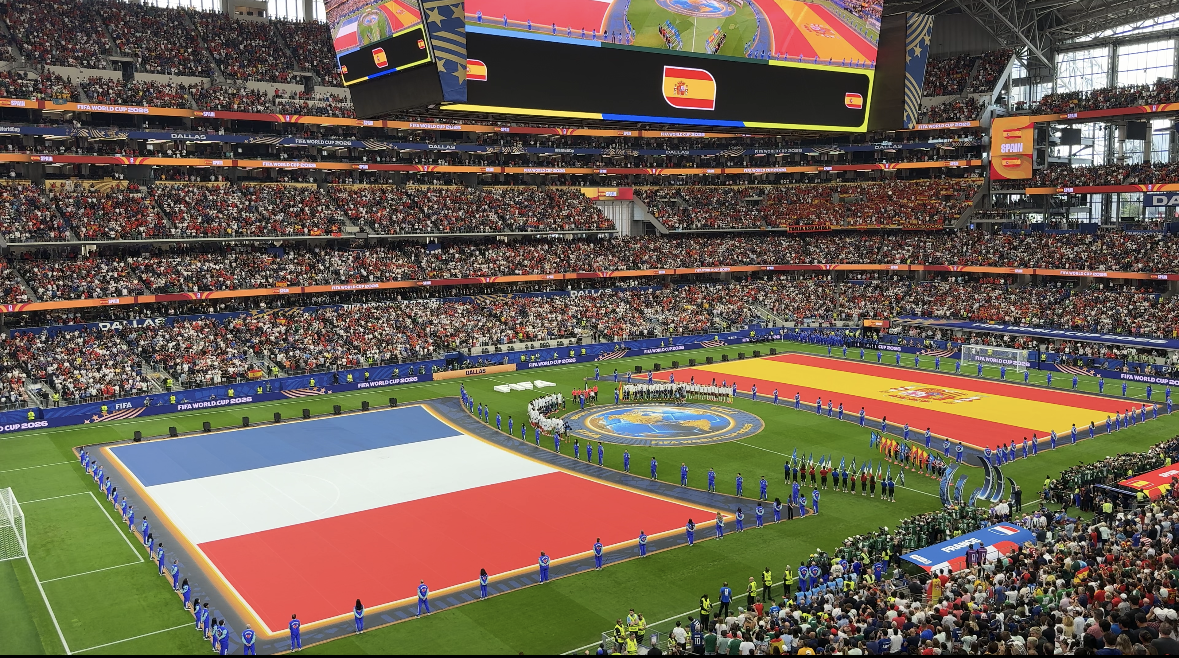
The Tartan Army marched the same path I walked every day to school from home. I was part of the Orange wave at AT&T Stadium with Dutch fans who I saw on the TV. The same stadium where I went to see Spain vs France in the semi-finals. It wasn’t just a semi finals for me. It was something more… Something I couldn’t explain; I bought the tickets for, my first live sporting event. Not sure how words can define what I felt in the stadium.
Mexico’s fans showered love on South Korea and Iran. The Iranian team’s locker room message went viral. Lamine Yamal became the face of a generation while carrying the weight of a Palestinian flag on his shoulders. Michel Kuka Mboladinga as Lumumba Vea stood motionless in a suit at every DR Congo match reminding the world what independence cost.
Nations that the news only shows you in crisis were suddenly on screen celebrating, dancing, hugging strangers, sharing food, sharing culture. We saw beyond everything. We saw that we are all the same. Cousins who love hanging out with each other, that’s why I’m sharing today’s blog with my cousin who has a better understanding of football than I do sharing our different experiences the language of a ball on a pitch.
I was a lifelong Messi fan. The number 10 jersey will belong to someone else now. It doesn’t sit right with me. I celebrated his 2022 World Cup win like it was my own. But not this year. Not after what I saw during this tournament. Not after the VAR decisions that felt like they favored the powerful. Not after Ronaldo’s 3-match suspension was reduced to one under FIFA’s Article 27, the same article later used for Argentina’s Otamendi. Not after the way certain calls went against smaller nations while the big names kept getting the benefit.
Maybe every call was technically correct. Maybe the technology got it right every time. But the spirit of football felt compromised. Human error in refereeing is acceptable. Selective enforcement of technology is not.
July 19, 2026: The Final
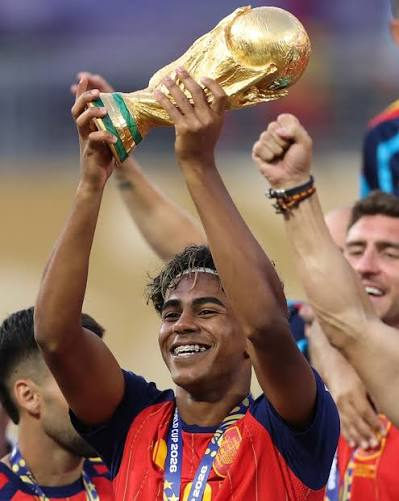
Today, Spain beat Argentina 1-0 in the World Cup final. Argentina didn’t register a single shot on target in 90 minutes. The first team in World Cup final history to fail to do so. Emiliano Martínez made 11 saves, a World Cup final record. Kylian Mbappé won the Golden Boot with 10 goals. And Messi walked off the pitch. Probably for the last time in a World Cup. Ronaldo may give it another shot in the 2030 tournament (because he is Ronaldo).
This year I cheered for the underdogs. Because no one wants to see the powerful keep winning with money and influence. People want liberation. People want to see change. People want to see those who work hard and give everything they have actually win. I cheered for DR Congo, Cape Verde, Senegal, Egypt. I didn’t care about star players. I wanted to see star players get a wake-up call that football is a team sport.
Messi’s tears after the Cape Verde and Egypt matches weren’t just emotion to me. They were fear. Toe-to-toe competition from nations that shouldn’t have been able to compete with Argentina and did anyway. Someone out there who you don’t know exists is grinding, and they can show you what they’re worth if you give them the chance.
Mo Salah, probably the second most loved Mohammad in the world, reminded everyone why Egypt adores him. Cape Verde, 600,000 people, held Spain to a draw and drew with Uruguay and nearly beat Argentina. These nations didn’t just play football. They carried their history onto the pitch.
Football evolved while I wasn’t watching. Now there can be up to 6 subs unlike the 3 of before. France’s tactic of kicking the ball out, which fans dubbed “the woke tactic,” was new to me. I learned who Lamine Yamal is. I didn’t know who Pedri was. I didn’t know most of the newer players. I knew Mo Salah, Ronaldo, Messi, Modrić and a few others. But a lot of the players I once knew were gone. The players evolved. The game moved on. And when I came back, it didn’t ask where I’d been. It just let me in. The same way it always does. The same way it let in the 3-year-old Roberto Baggio who promised his crying father he’d bring the trophy home.
The football guy in me has been reborn. And this World Cup didn’t just bring me back to the sport. It reminded me why humanity is worth believing in.
Now I Need a New Name
Do I need to pick someone? Is that how football works? You attach yourself to a player and their journey becomes yours. Messi was mine for two decades. Now do I need to choose again?
Mbappé? The Golden Boot winner. 10 goals. The most decisive player in the tournament. But he’s 27 and already feels like the establishment.
Lamine Yamal? 18 years old. World Cup winner. Not afraid to hold a Palestinian flag during a bus parade.
Haaland? The guy who is humble and politically conscious with pretty bags.
I don’t know yet. And maybe that’s the point. Maybe the next one finds you the way Messi found me. Not through a decision. Through a moment you weren’t expecting. Or maybe I don’t need to pick one. There could be a Vozinha somewhere, a 40-year-old goalkeeper from a country of 600,000 that the whole world suddenly wants to see win. There could be another Mo Salah, someone you want to see go further in their last World Cup than Messi or Ronaldo ever did. Maybe the era of picking one name is over. Maybe the next era belongs to the moments, not the names.
What Next?
As ShotBlogged wrote before the final: “I think football will do exactly what it has done throughout its entire history, move on. It moved on from Ferenc Puskás, from Pelé, from Johan Cruyff, from Franz Beckenbauer, from Diego Maradona, from Ronaldo Nazário, from Zinedine Zidane, from David Beckham, from Ronaldinho, and it will move on from Lionel Messi and Cristiano Ronaldo.”
He’s right. Football always moves on. The question was never “what next?” It was always “who next?”
The next era might not need another duopoly. It might need what ShotBlogged compared to WWE’s Ruthless Aggression Era: when Stone Cold Steve Austin and The Rock left, WWE didn’t search for replacements. They spread the spotlight across John Cena, Batista, Rey Mysterio, Edge, Eddie Guerrero, Kurt Angle. None of them were Austin or Rock. They were never meant to be. Football might be approaching the same crossroads.
Leading the generation are the obvious names. Mbappé, already a World Cup winner and now Golden Boot holder twice over. Haaland, whose goalscoring numbers defy comprehension. Vinícius Júnior, one of the most electrifying players alive. Bellingham, the complete midfielder. And then the next wave: Yamal, Wirtz, Palmer, Pedri, Saka, Neves, Musiala, Cubarsí, Zaïre-Emery, Estêvão.
As ShotBlogged put it: “Better coaching, improved academies, global scouting networks and unprecedented investment have transformed the game into one where elite talent is produced at an unprecedented rate. The gap between good and great has never been smaller.”
The Age Problem
Part of what made Messi vs Ronaldo transcendent was the timing. Messi was born in 1987. Ronaldo in 1985. Two years apart. Their entire primes overlapped perfectly. Every Ballon d’Or, every Champions League, every El Clásico, they were both there, both at their best, both pushing each other higher. You can’t manufacture that.
Mbappé is 27. Haaland is 25. Close enough in age, but the rivalry hasn’t reached the same narrative depth. As ShotBlogged noted: “Mbappé and Haaland do have their own fanbases, but the rivalry feels different. There is admiration between the players, respect between most supporters, and nowhere near the same level of animosity. They have not formed their cults yet.”
Mbappé and Yamal have the El Clásico dream. Real Madrid vs Barcelona. But Mbappé is almost a decade older than Yamal. Messi and Ronaldo worked because they aged together. Mbappé will be winding down when Yamal is peaking. The paths will cross, and it’ll be spectacular. But a rivalry needs overlapping primes to define an era.
Lightning in a Bottle
ShotBlogged’s closing said it best, and I’m not going to try to improve on it:
“People often call artists like The Weeknd or Taylor Swift the closest thing to Michael Jackson, at least in terms of commercial success. Sure, they are amazing artists, but with all due respect, the comparison is laughable. Not just about the numbers.
Shah Rukh Khan’s Jawan and Pathaan may have shattered box office records, but do they truly capture the cultural impact of his incredible run from the mid ’90s to the late 2000s? Not just about the numbers.
The Indian cricket team has enjoyed one of the most successful periods in its history, but does it really compare to Australia’s dominance from the late 1990s to the late 2000s, or to the fearsome West Indies sides of the ’70s and ’80s? Not just about the numbers.
Avengers: Doomsday may go on to earn billions, but can it ever recapture the magic of Avengers: Endgame? Not just about the numbers.”
What Messi and Ronaldo created was lightning in a bottle. Never to be copied. Never to be replicated. Two players reaching that level of rivalry, simultaneously, for two decades. That’s not a formula. That’s fate.
The Man Who Died Standing and the Two Who Lived Forever
It’s a shame that the talent of Lionel Messi could not win a Puskás Award during his career. It is an honour that the same talent won him the World Cup.
It’s a shame that the talent of Cristiano Ronaldo could not win the World Cup. It is an honour that the same talent won him the Puskás Award.
It’s a shame Messi could not win five Champions Leagues. It is an honour Ronaldo did. It’s a shame Ronaldo could not win the Ballon d’Or eight times. It is an honour Messi did.
Both have different achievements. Both are historical in their own way. The footballing gods were kind enough to give them both to us at the same time.
If you score 15 World Cup goals, you become Ronaldo Nazário. If you register 300+ assists, you become Puskás. If you win 5 Ballon d’Ors, you become Ronaldo. If you score World Cup hat-tricks, you become Kylian Mbappé. If you score 80+ goals in a year, you become Gerd Müller. If you score 600+ goals for a single club, you become Pelé. But if you do it all by yourself, you become Lionel Messi. The actual GOAT of football.
Roberto Baggio made a promise at three years old and stood motionless on a pitch in Pasadena when it broke. Football moved on from him. Today, in New Jersey, it began moving on from Messi and Ronaldo too. But moving on doesn’t mean forgetting. Baggio is still remembered. Pelé is still remembered. Maradona is still remembered. And Messi and Ronaldo will be remembered longer than any of them.
The question was never “what next?” It was always “who next?”
Maybe the answer just lifted the World Cup trophy in New Jersey. Maybe it’s the 18-year-old with a Palestinian flag and a World Cup medal. Maybe the next great rivalry has already begun.
We just haven’t realized it yet.